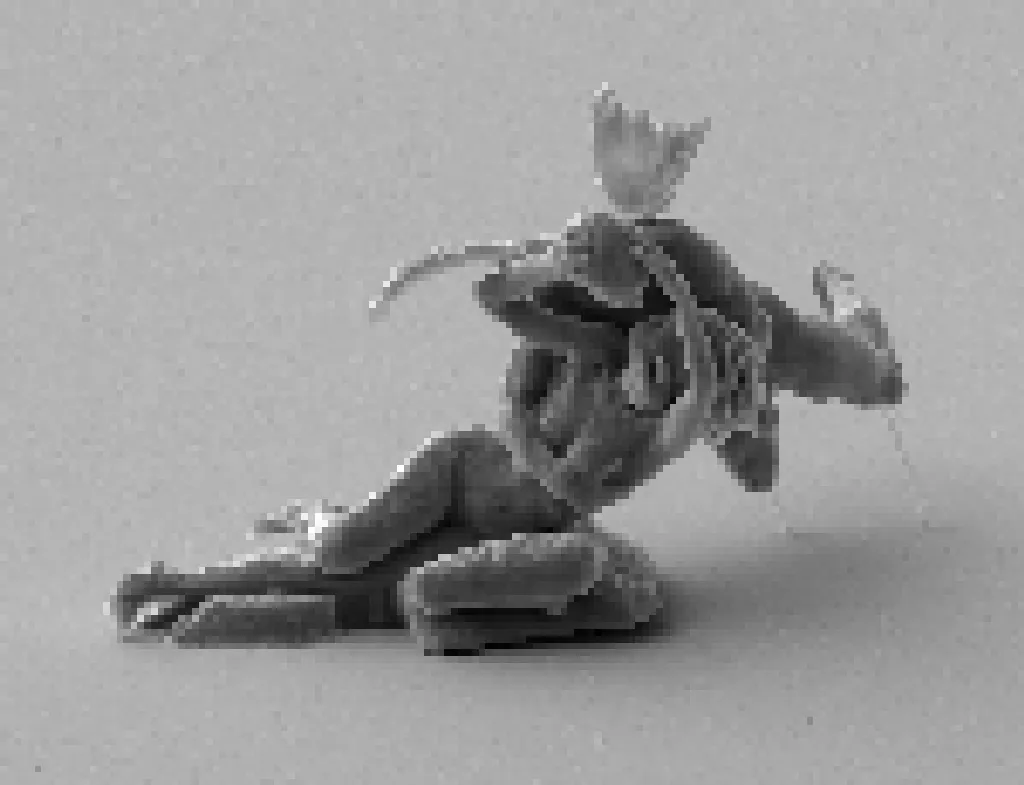
Trust
- Edition Size:
- 8
- Artist Copies:
- 4
- Year:
- 2014
- Dimensions:
- 0.03w x 0.015h x 0.01d cm
- Materials:
- Resin And Gold
Cited in over 50 academic publications
Cited extensively in academic publications — across both art and science.
The nano sculpture work has been the subject of peer-reviewed research across materials science, art theory and intellectual-property scholarship. A selection of the most cited and most compelling English-language papers:
1. Art on the Nanoscale and Beyond — Advanced Materials (Wiley), 2016. Read paper
2. Nanoart: Art on the Nanoscale and Beyond — Cover Feature — Advanced Materials, Vol. 28, Issue 9, 2016. Read paper
3. Molecules to Masterpieces: Bridging Materials Science and the Arts — Advanced Materials (Wiley), 2025. Read paper
4. Inverting the Paradigm: From Art to Granular Science — Leonardo (MIT Press), 2022. Read paper
5. Navigating Intellectual Property Rights, Nanotechnology and Art — Master's thesis, KU Leuven, 2018. Read paper
Browse the full citation graph on Google Scholar.
Filmed inside a Scanning Electron Microscope
Ground-breaking film created in a Scanning Electron Microscope — in collaboration with Stefan Diller, Würzburg, Germany.
This revolutionary filming technique draws on the early days of the film industry, using stop-frame photography to painstakingly create a moving image.
Using a Scanning Electron Microscope (SEM) at high magnification, hundreds of images of the nano sculpture were captured as a Piezo stage was rotated to a precision of below one ten-thousandth of a degree. Each individual frame can take several minutes to capture — meaning a single second of film can take up to four hours to shoot. A painstakingly detailed process, in which any micro-blip means starting again from scratch.
All of this is achieved with a ground-breaking optical system developed by Stefan Diller in Würzburg, Germany, called Nanoflight.Creator — the only system in the world capable of SEM film.
At this scale, the very act of observation alters the subject. Electrons fired at the sculpture behave less like particles and more like waves of probability — a reminder that the quantum world refuses to sit still for its portrait.
Each resulting film is minted as a one-of-one NFT — a permanent, on-chain record of a moment that took weeks to capture and only seconds to witness.
CNN — Ones to Watch
CNN selected Jonty Hurwitz as one of the world's emerging creative voices, filming inside the Karlsruhe Institute of Technology as a new nano sculpture was crafted using quantum physics.
CNN Ones to Watch
A documentary by CNN on the creation of the nano sculptures - behind the scenes in the laboratory.
"CNN Ones to Watch" captures the figure of Yifat Davidoff — Jonty's art partner and life-long love — dancing delicately on a single strand of human hair. The work can only be seen through a powerful scanning electron microscope.
The documentary follows Hurwitz in the laboratory at one of the world's leading universities in engineering and natural sciences — the Karlsruhe Institute of Technology in Germany — as the alchemist turned artist crafts a new work.
TEDx — The Art and Science of Love
The love story behind the world's smallest figurative sculpture, told from the stage of TEDxMPIStuttgart.

TED Talk
The love story and philosophy behind the world’s smallest sculptures.
Jonty Hurwitz takes the audience inside the science and the romance of nano-scale art — from two-photon absorption in a UV-curing resin to a thirty-year love story that became a Guinness World Record.
A talk about how art, science and human emotion converge at a scale smaller than the width of a human hair.
How's It Made?
How the world's smallest figurative sculptures are built — atom by atom — using quantum physics.
The nano sculptures are created using a process called multiphoton lithography — a form of fabrication born directly from the strange rules of quantum physics. Instead of carving material away, focused pulses of laser light trigger chemical reactions only at the exact point where multiple photons interact simultaneously, allowing structures to be built with extraordinary precision in three dimensions.
At this scale, the boundary between science and imagination begins to disappear. The sculptures are not shaped by human hands in the traditional sense, but emerge from controlled interactions between light, matter, and probability itself. Using techniques developed from cutting-edge physics and nanotechnology, it becomes possible to create objects smaller than the wavelength of visible light — structures that exist at the threshold of what humans can physically perceive.
Guinness World Record
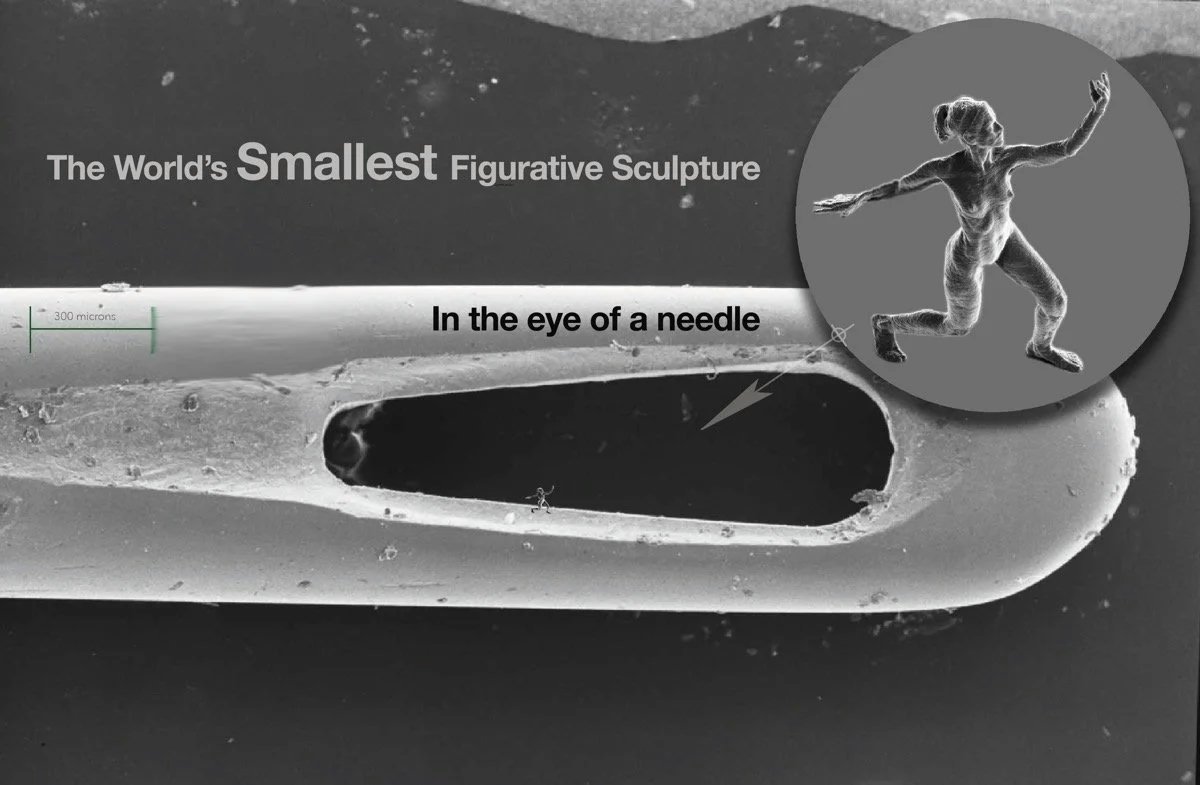
Twice recognised by the Guinness Book of Records for the smallest sculpture of a human form ever created.
Guinness Word Record
The smallest sculpture modelled on a real person was "Trust"
In 2015 the figure of Trust was certified by Guinness as the smallest sculpture of a human form. The Fragile Giant — a nano elephant — followed, an entire herd of which could comfortably stand on the eye of a needle.
Press & Reactions
The nano sculpture series has reached an estimated 30+ million people through press, broadcast and social channels.
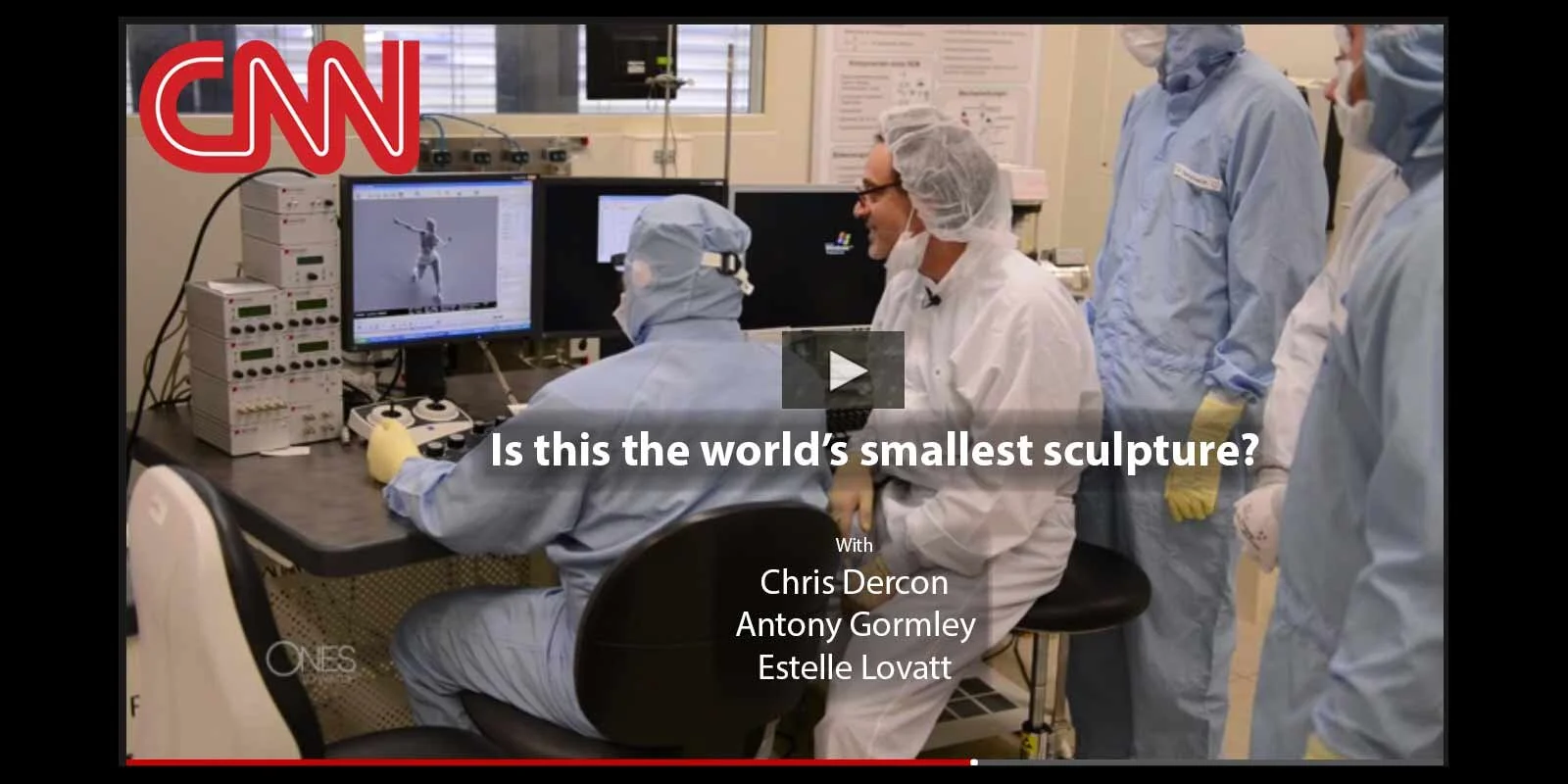
March 2015
Jonty selected as"One to Watch" by CNN
‘CNN Ones to Watch’ captures Hurwitz’s figure of a woman who can only be viewed through a microscope, as she dances delicately on a single strand of human hair. His quest to merge art and
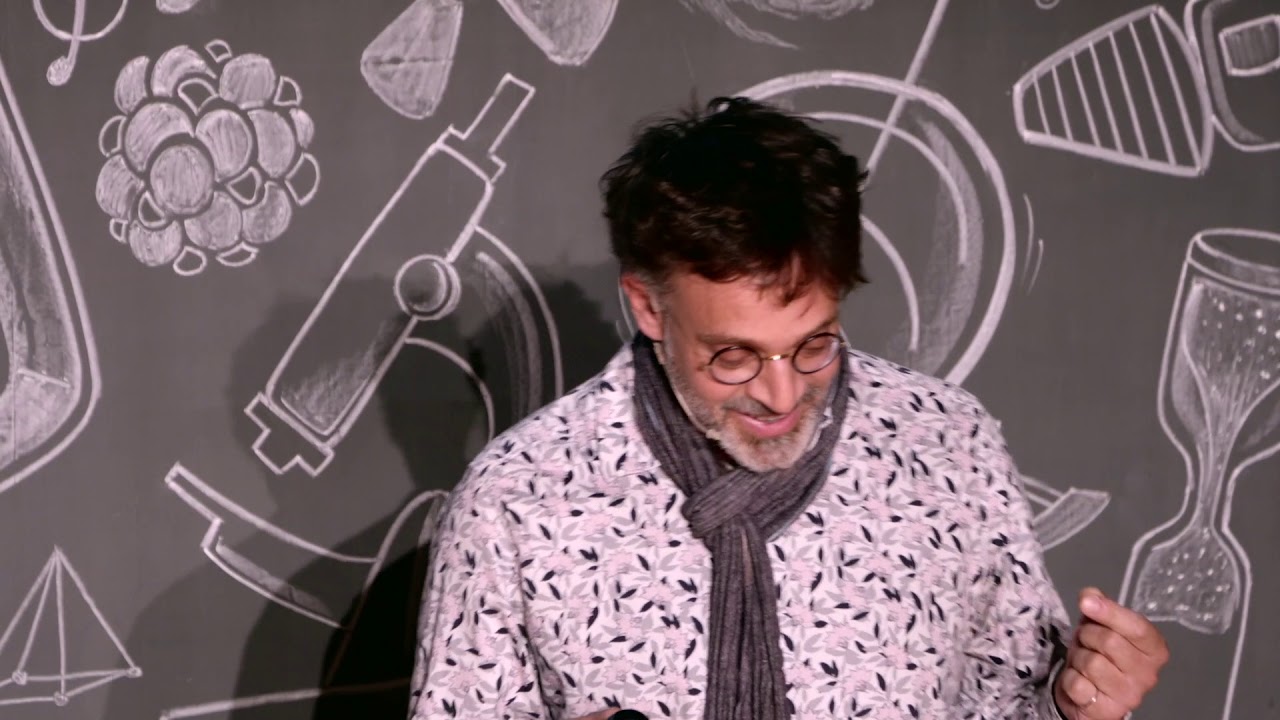
December 2023
The Art and Science of Love: TEDx talk
The world's smallest sculpture and the love story behind it.

December 2023
El País Feature - Nano Sculptures
It’s great to see the art of nanotechnology being featured in El País. El País is a Spanish-language daily newspaper in Spain.
November 2014
Nano sculptures go viral on the internet
Jonty Hurwitz's nano sculptures have gone viral, amassing an estimated 30 million views across global news sites and blogs within just three days of their launch.
November 2014
The story of Trust: How the world's first nano sculpture was destroyed
The story of Trust: A nano sculpture

August 2015
The making of "Fragile Giant" and "The Surfer"
The making of "Fragile Giant" A short video looking at how these ground breaking videos were made shooting the nanotech sculptures of Jonty Hurwitz
November 2014
Interview with Jonty Hurwitz the man behind the "Worlds Smallest 3D Prints"
Interview with Jonty Hurwitz the man behind the Worlds Smallest 3D Prints
A Unique Microscope and Stage For Public Exhibitions
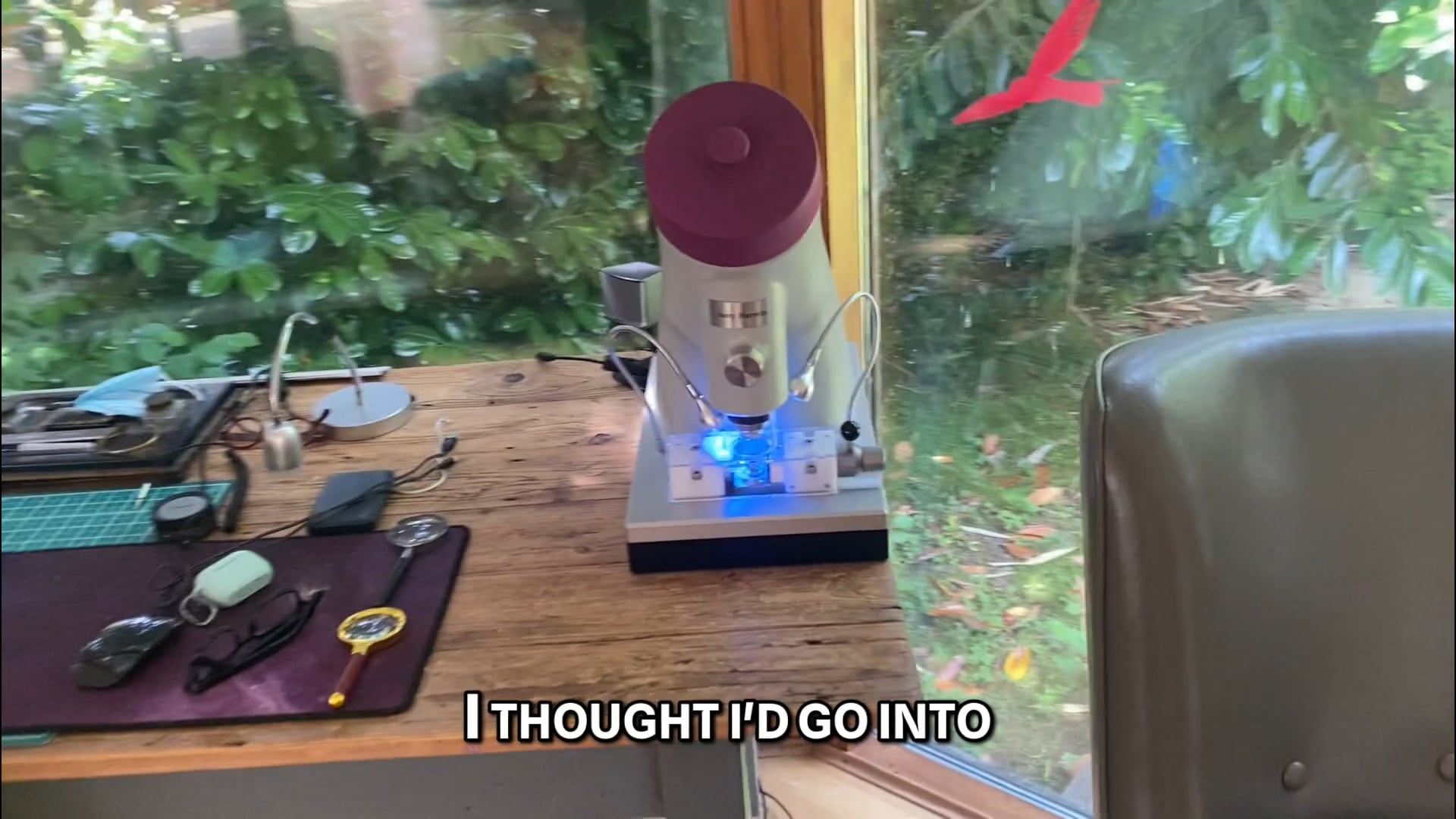
Just as a frame gives a painting its place in the world, our custom microscope and stage give the nano sculptures a way to be seen. They transform the invisible into an interactive encounter, allowing viewers to navigate and engage with the work in real time.
Unique Microscope
Designed for the Fragile Giant Sculpture
Stage
The microscope stage lets you move the sculpture around
The Stage
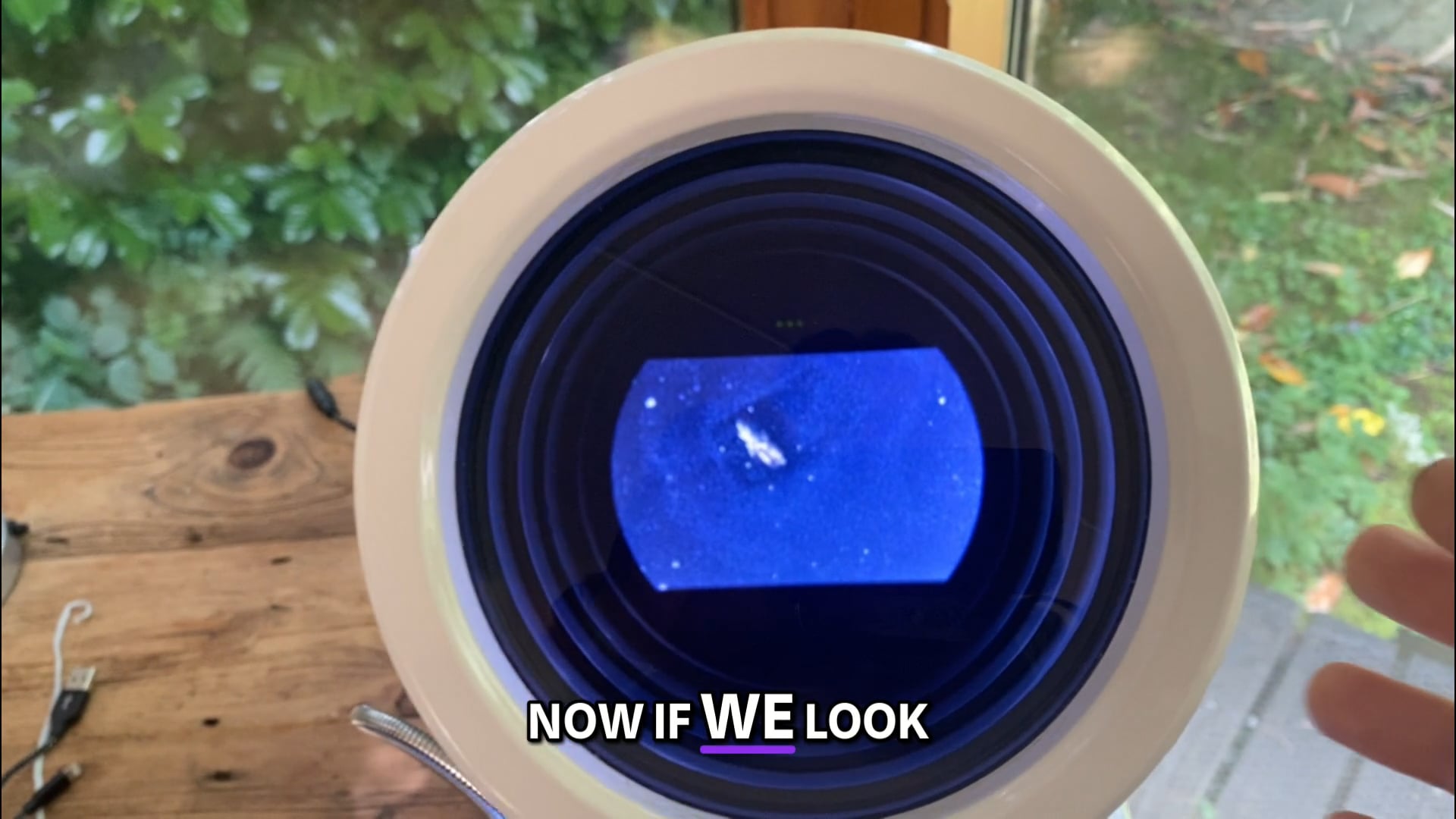
Looking through the Microscope
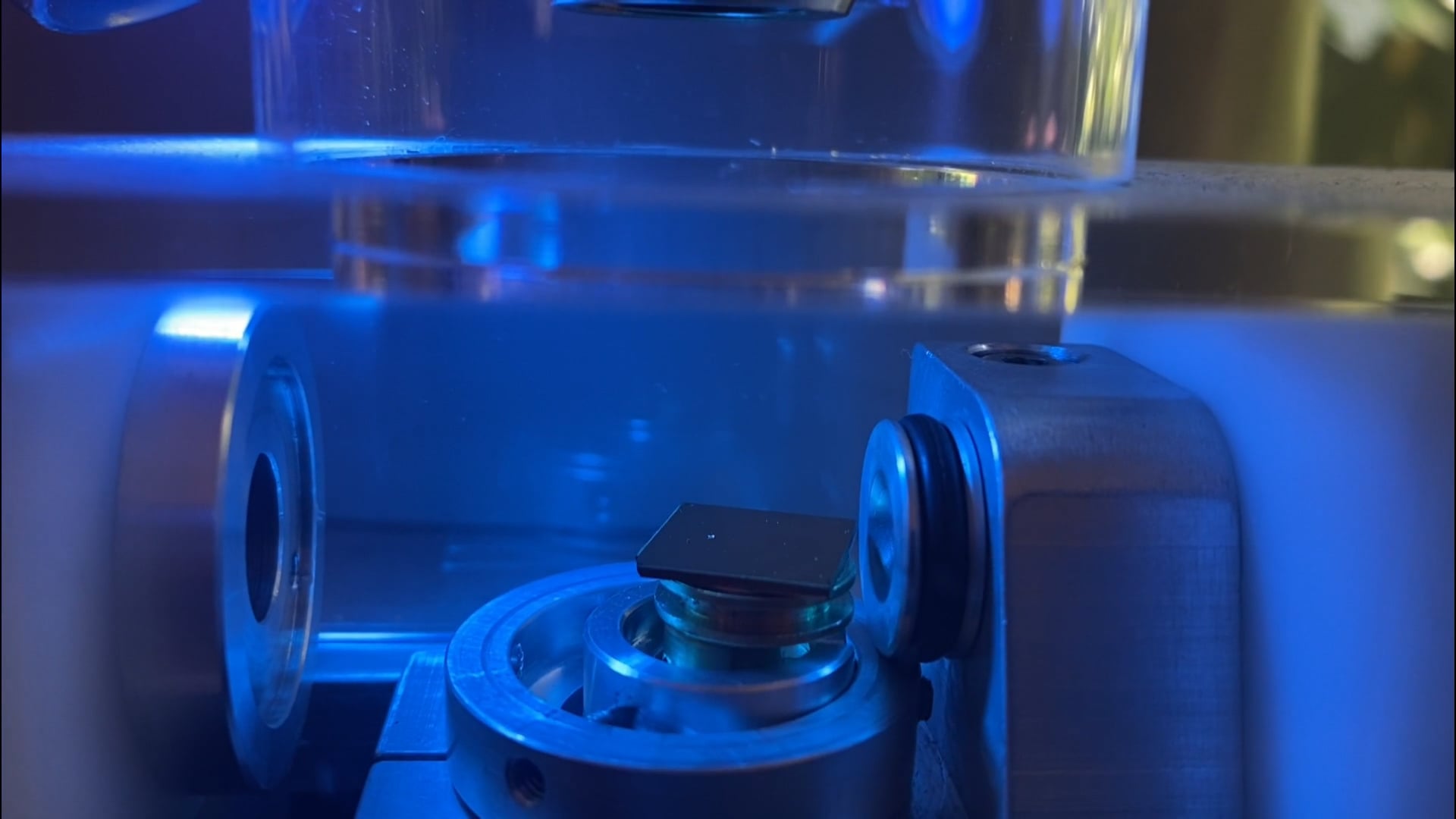
Is It Dust?
Developed in collaboration with optical engineer Budd Wentz and precision instrument specialist Stephan Diller, the custom microscope and interactive stage were conceived as an integral part of the nano sculpture experience itself. More than a viewing device, the system transforms the act of observation into an intimate encounter with a world beyond ordinary perception.
Engineered specifically for the demands of museum-grade usage, the microscope enables viewers to navigate the artwork dynamically — shifting perspective, adjusting position, and exploring the piece in real time through a responsive mechanical stage. The result is not a passive act of looking, but an active journey through a hidden landscape measured in microns.