The Art of Jonty Hurwitz & Yifat Davidoff

    The Art of Jonty Hurwitz & Yifat Davidoff

    technique

    Stratified Forms

    Also: layering, sliced forms, strata sculpture, geometric layers, stratification art, layered sculpture, sliceform, sectioning

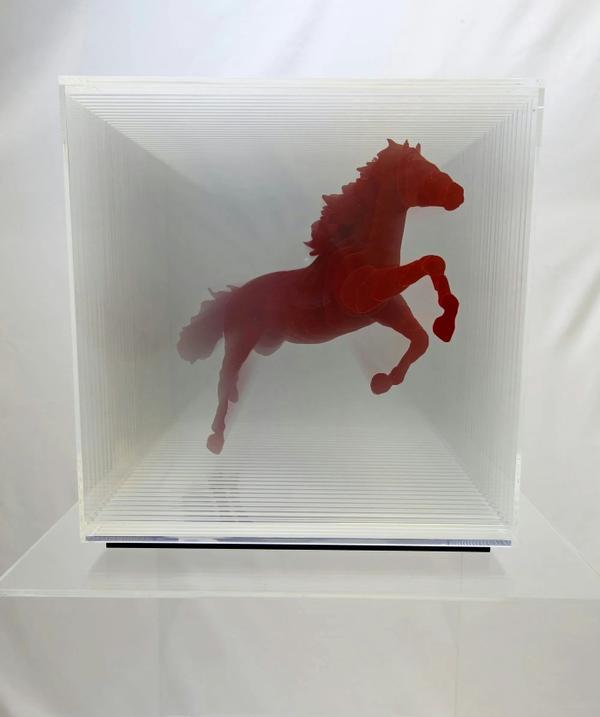
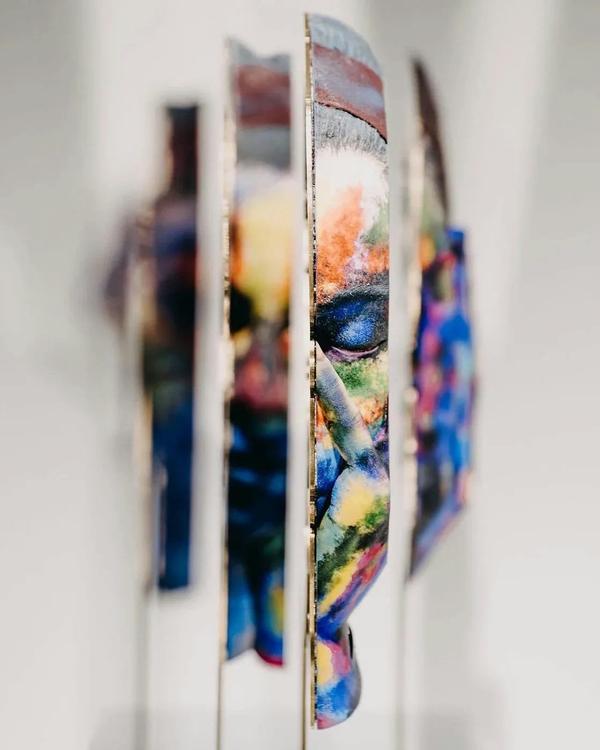
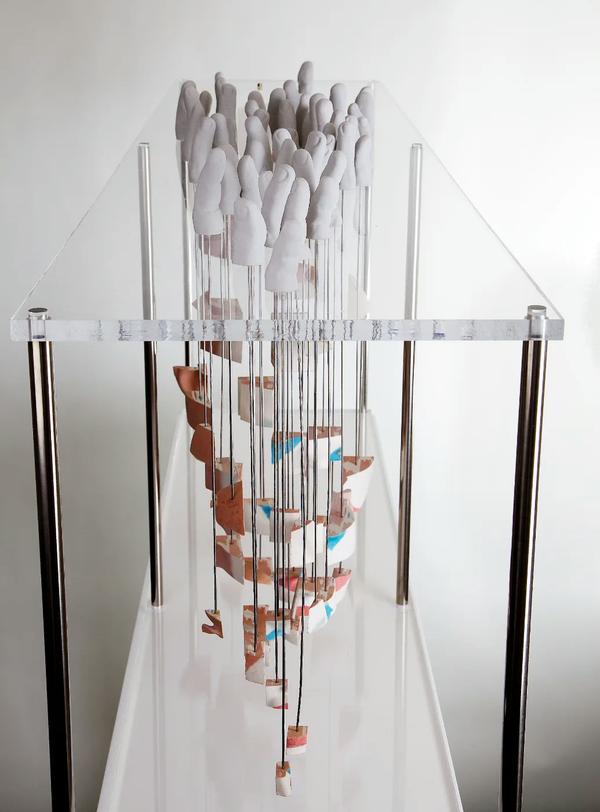
    A sculptural and artistic approach central to Jonty Hurwitz's practice in which works are constructed from sequential geometric layers — each existing independently as a fragment and collectively as a unified whole — requiring the viewer to actively reconstruct meaning from incomplete information.

    Definition

    Stratified forms are artworks constructed from sequential layers, planes or slices that simultaneously exist as individual elements and as a unified whole. The spaces between strata — the voids — become integral to the work, creating meaning through the relationship between presence and absence, fragment and whole. The viewer's act of perceptual reconstruction completes the artwork.

    Discussion

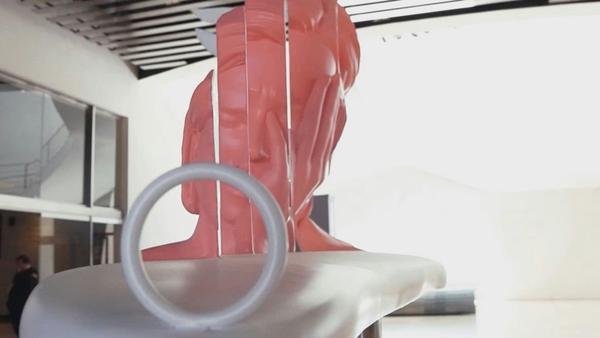
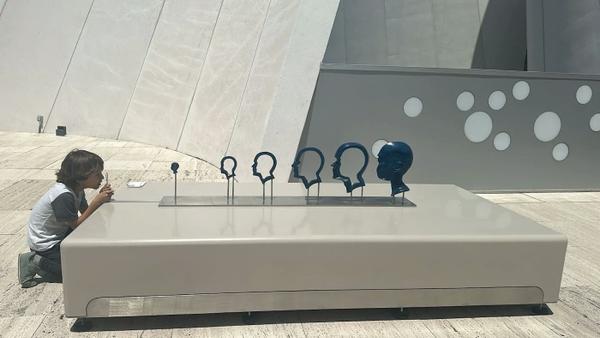
    Stratified Forms are a type of sculpture constructed from a series of discrete layers, or strata. In this technique, no single plane contains the complete three-dimensional form; rather, the form emerges as an optical and cognitive synthesis of the assembled parts. The spaces between the layers are as critical as the material itself, contributing to the perception of volume, depth, and shape. This method relies on the viewer's brain to complete the object, creating a whole that is perceptually greater than the sum of its parts. The approach has significant philosophical implications, exploring how complex realities are constructed from simpler, fragmented information. It suggests that meaning and identity are not inherent or fixed properties, but emergent phenomena that arise from the relationship between components. As the viewer moves around a stratified work, their changing perspective actively participates in the assembly of the form, demonstrating how coherence can arise from disconnected elements. This process transforms the passive viewer into an active participant in the creation of meaning. This technique draws on the visual language of geology and modern scientific imaging, such as computed tomography (CT) or magnetic resonance imaging (MRI), where a solid body is understood by revealing its internal structure through successive cross-sections. Each stratum functions as both an individual fragment and a constituent of a larger system. This method suggests that reality is not always encountered as a unified, immediate surface, but as something to be built up, revealed, and understood through depth and the careful examination of its constituent layers.

    Featured in

    Stratified Forms

    A sculptural and artistic approach central to Jonty Hurwitz's practice in which works are constructed from sequential geometric layers — each existing…

    Stratified forms are artworks constructed from sequential layers, planes or slices that simultaneously exist as individual elements and as a unified whole.

    The spaces between strata — the voids — become integral to the work, creating meaning through the relationship between presence and absence, fragment and whole.

    The viewer's act of perceptual reconstruction completes the artwork.

    Stratified Forms are a type of sculpture constructed from a series of discrete layers, or strata.

    In this technique, no single plane contains the complete three dimensional form; rather, the form emerges as an optical and cognitive synthesis of the assembled parts.

    The spaces between the layers are as critical as the material itself, contributing to the perception of volume, depth, and shape.

    This method relies on the viewer's brain to complete the object, creating a whole that is perceptually greater than the sum of its parts.

    The approach has significant philosophical implications, exploring how complex realities are constructed from simpler, fragmented information.

    It suggests that meaning and identity are not inherent or fixed properties, but emergent phenomena that arise from the relationship between components.

    As the viewer moves around a stratified work, their changing perspective actively participates in the assembly of the form, demonstrating how coherence can arise from disconnected elements.

    This process transforms the passive viewer into an active participant in the creation of meaning.

    This technique draws on the visual language of geology and modern scientific imaging, such as computed tomography (CT) or magnetic resonance imaging (MRI), where a solid body is understood by revealing its internal structure through successive cross sections.

    Each stratum functions as both an individual fragment and a constituent of a larger system.

    This method suggests that reality is not always encountered as a unified, immediate surface, but as something to be built up, revealed, and…