The Art of Jonty Hurwitz & Yifat Davidoff

    The Art of Jonty Hurwitz & Yifat Davidoff

    technique

    Polargraph Art

    Also: polargraph, pen plotter, algorithmic drawing, computational portrait, drawing machine art, plotter art, generative drawing, v-plotter art

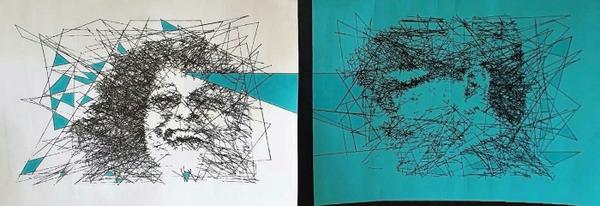
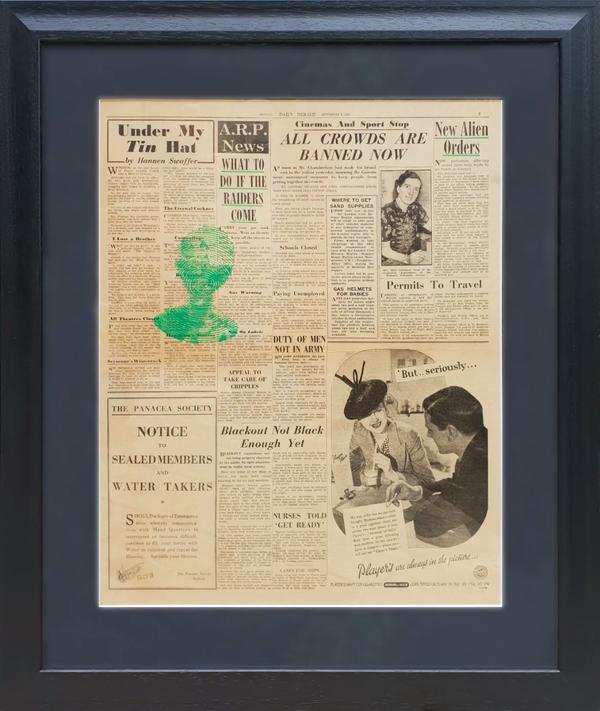
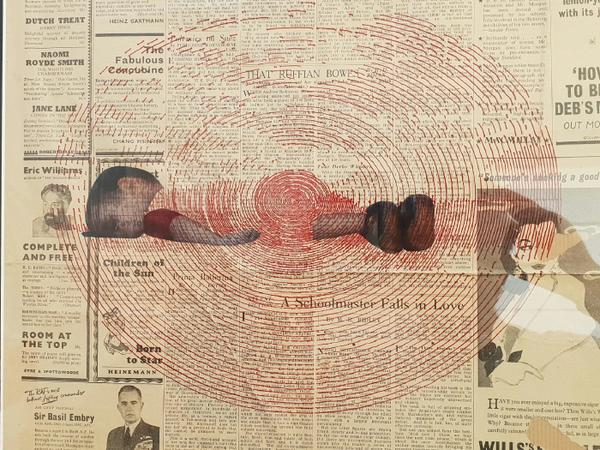
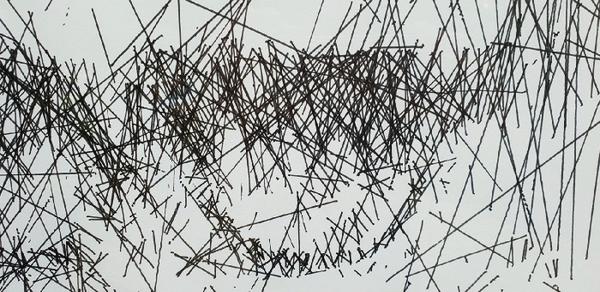
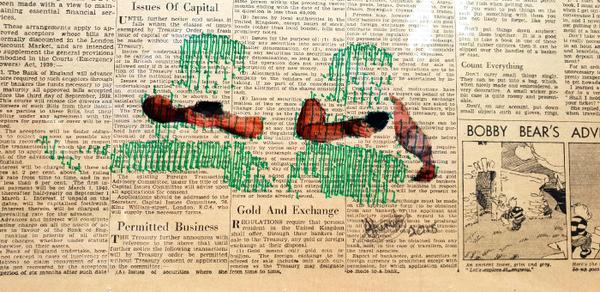
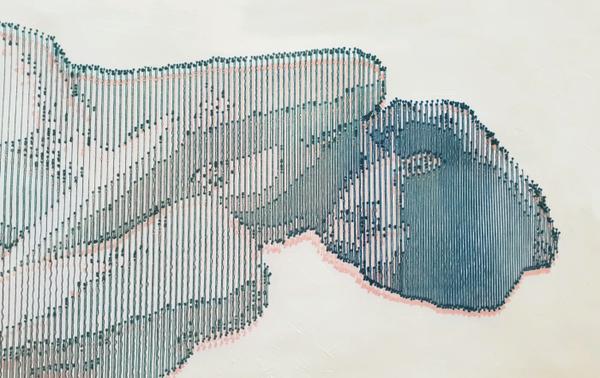
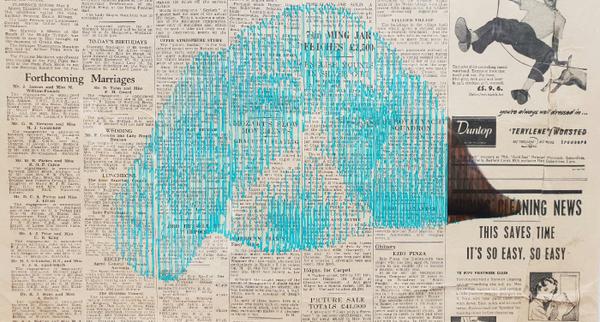
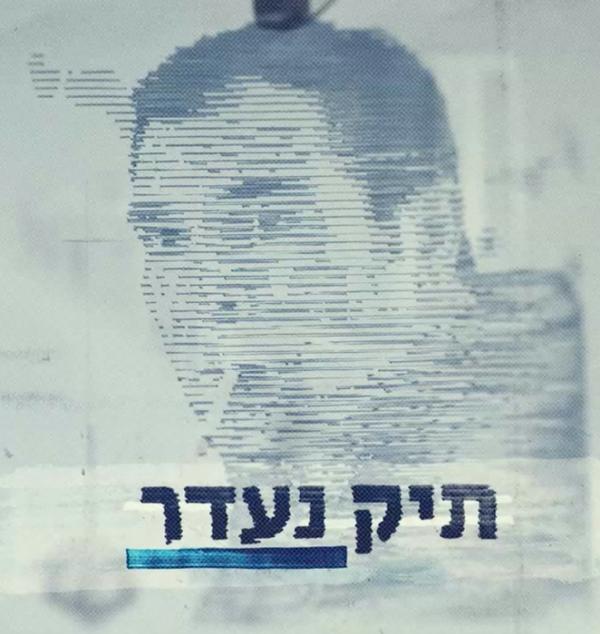
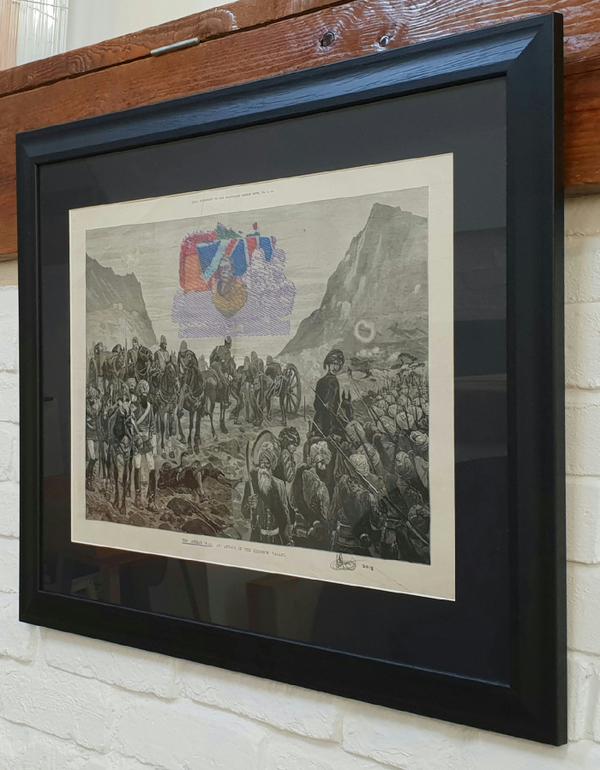
    A drawing practice in which Jonty Hurwitz uses a polargraph — a pen suspended between two motors, guided by mathematical coordinates — to translate portraits into thousands of algorithmic marks. Each work emerges gradually from a field of lines: recognisable as a human form from a distance, dissolving into pure abstraction up close.

    Definition

    Polargraph art is work created using a polargraph drawing machine — a pen suspended on cords between two motors, which moves across a surface by continuously adjusting cord lengths to translate digital coordinates into physical marks. The result is a pen drawing that is simultaneously computational and handmade: precise in its mathematical logic, yet shaped by gravity, friction, ink behaviour, and time.

    Discussion

    Polargraph art is a sub-genre of computational drawing created by a specific type of pen plotter known as a polargraph. The apparatus consists of a writing instrument suspended by cords between two motors. By algorithmically adjusting the length of these cords, the machine moves the pen across a vertical surface, translating digital information, such as vector coordinates or image data, into a physical drawing. Unlike a digital print, which is a facsimile, each polargraph work is a unique temporal production, a visible record of an extended process. The final appearance is shaped not just by the source code but also by physical forces and material properties, including gravity, friction, the tension of the cords, and the interaction of ink and paper. As a form of plotter art, polargraph drawing extends a lineage of generative and computer-assisted art practices dating to the 1960s. These practices remove the artist’s hand in the conventional sense, replacing it with a system of rules and mechanical execution. However, the polargraph reintroduces a tangible, almost craft-like quality. The slow, deliberate movement of the pen inscribes time into the work, and the inherent imprecisions of the mechanism ensure that no two drawings are identical. This delicate balance between computational precision and physical unpredictability is a defining characteristic of the technique. Artists employing this method often engage with themes of translation, embodiment, and perception. The process of converting abstract data into a physical object questions how information assumes material form. In works of portraiture, for example, the technique can explore how human identity might be represented or fragmented through data and mechanical gesture. The resulting images often hover between abstraction and representation; a coherent figure may be visible from a distance, but dissolves into a web of discrete lines upon closer inspection, highlighting the viewer’s cognitive act of resolving an image from a field of marks.

    Featured in

    Polargraph Art

    A drawing practice in which Jonty Hurwitz uses a polargraph — a pen suspended between two motors, guided by mathematical coordinates — to translate…

    Polargraph art is work created using a polargraph drawing machine — a pen suspended on cords between two motors, which moves across a surface by continuously adjusting cord lengths to translate digital coordinates into physical marks.

    The result is a pen drawing that is simultaneously computational and handmade: precise in its mathematical logic, yet shaped by gravity, friction, ink behaviour, and time.

    Polargraph art is a sub genre of computational drawing created by a specific type of pen plotter known as a polargraph.

    The apparatus consists of a writing instrument suspended by cords between two motors.

    By algorithmically adjusting the length of these cords, the machine moves the pen across a vertical surface, translating digital information, such as vector coordinates or image data, into a physical drawing.

    Unlike a digital print, which is a facsimile, each polargraph work is a unique temporal production, a visible record of an extended process.

    The final appearance is shaped not just by the source code but also by physical forces and material properties, including gravity, friction, the tension of the cords, and the interaction of ink and paper.

    As a form of plotter art, polargraph drawing extends a lineage of generative and computer assisted art practices dating to the 1960s.

    These practices remove the artist’s hand in the conventional sense, replacing it with a system of rules and mechanical execution.

    However, the polargraph reintroduces a tangible, almost craft like quality.

    The slow, deliberate movement of the pen inscribes time into the work, and the inherent imprecisions of the mechanism ensure that no two drawings are identical.

    This delicate balance between computational precision and physical unpredictability is a defining characteristic of the technique.

    Artists employing this method often engage with themes of translation, embodiment, and perception.

    The process of converting abstract data into a physical object questions how information assumes…