Metamorphic — Artworks by sentient.art
Metamorphic
4Works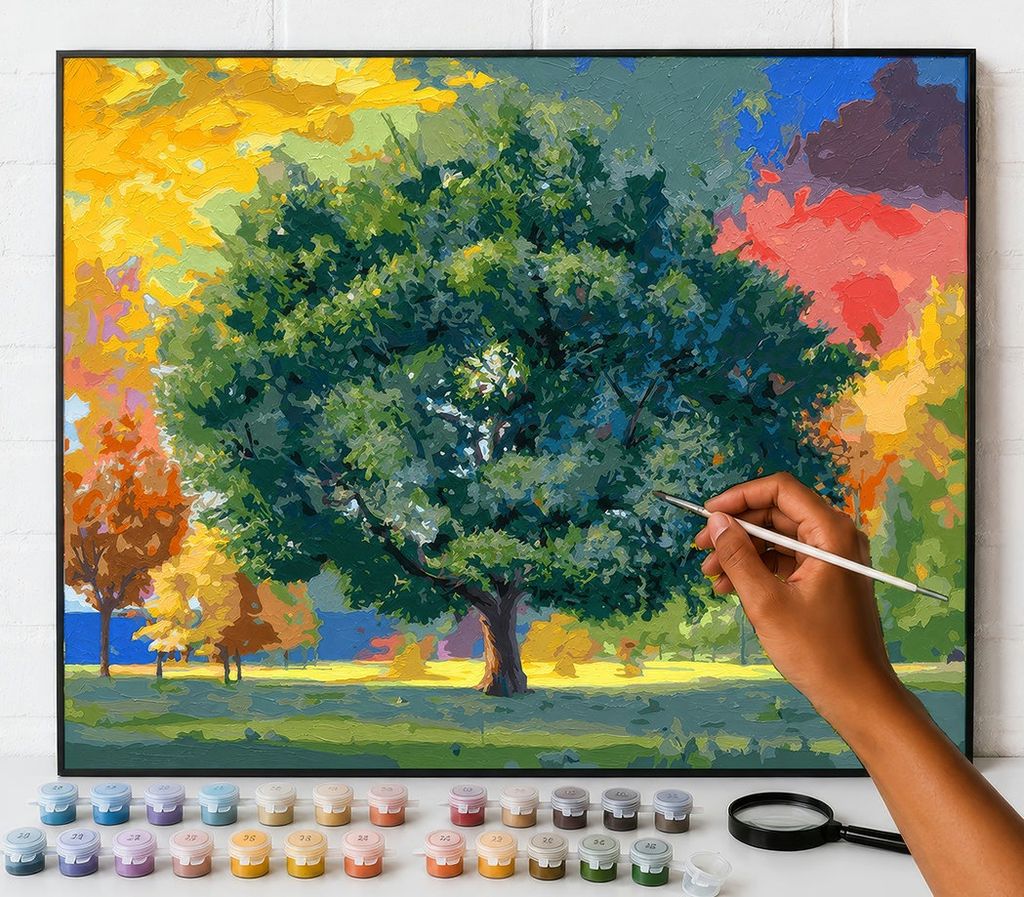
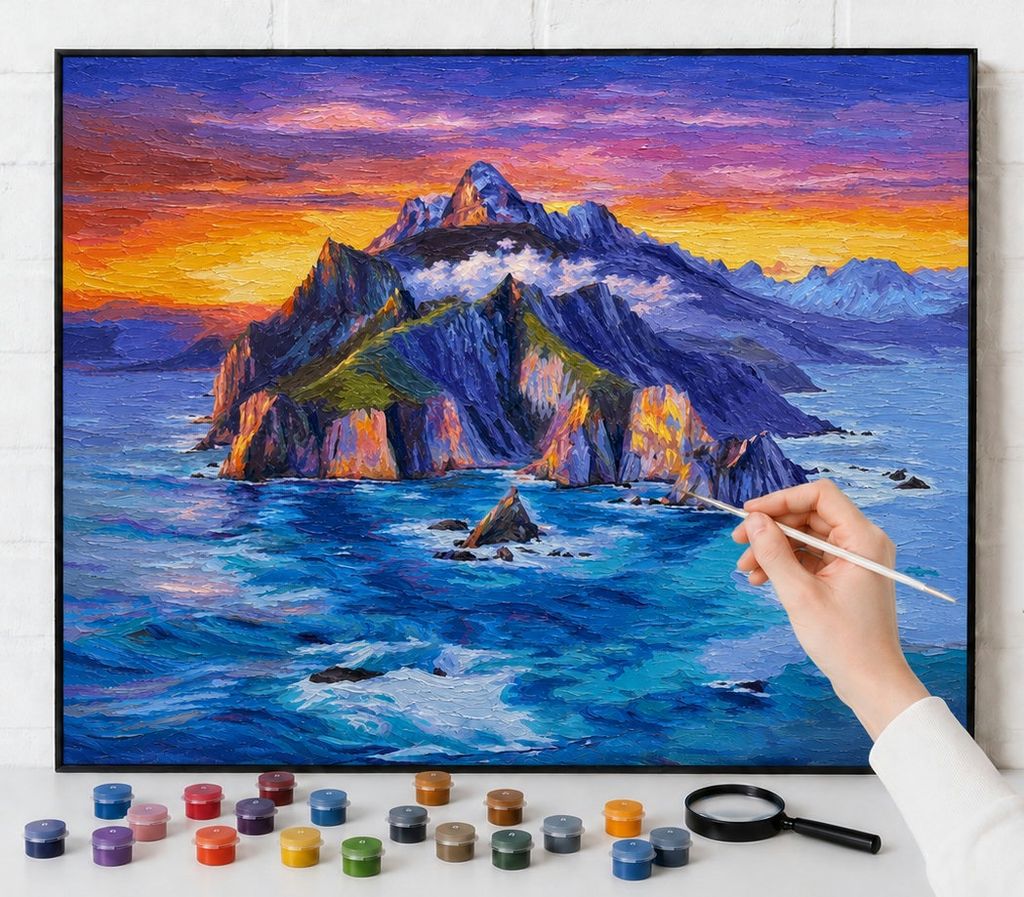
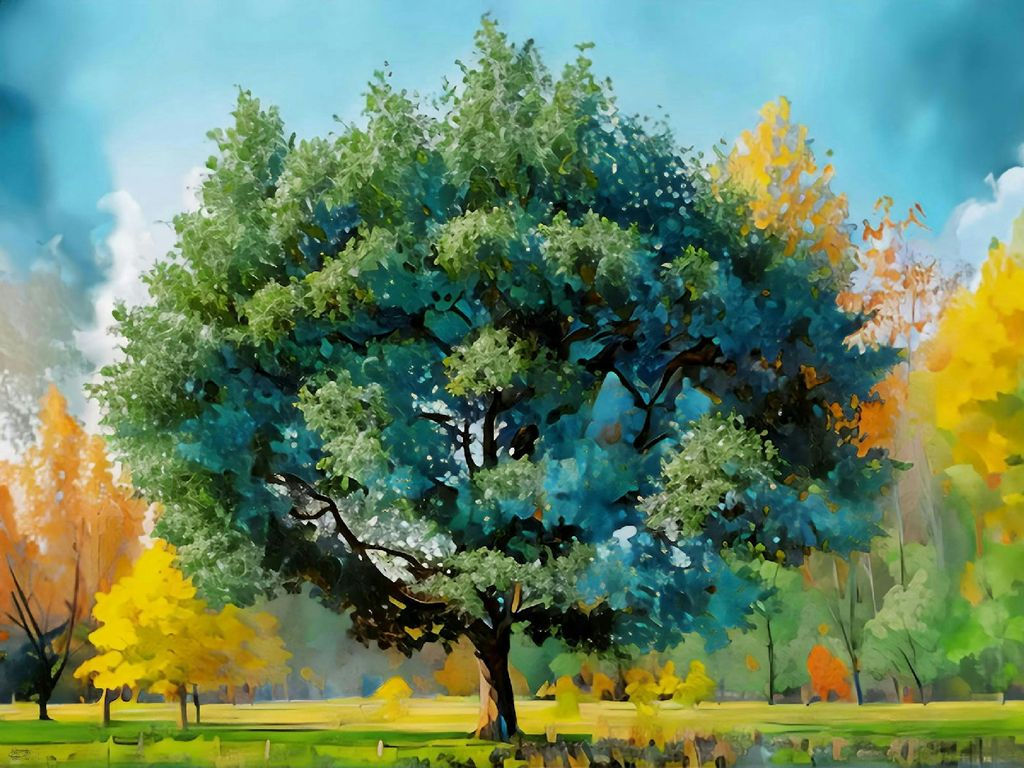

Metamorphic art refers to a class of visual compositions in which perceptual interpretation changes as a function of viewing distance, scale, or spatial integration. At close range, the observer perceives local elements—often fragmented shapes, brushstrokes, or discrete objects—while at greater viewing distances these elements spatially integrate into a different, higher-order image. This effect arises from principles of visual perception and multiscale processing in the human visual system. The phenomenon exploits the fact that the visual cortex processes images hierarchically: fine spatial frequencies dominate near-field perception, whereas coarse spatial frequencies dominate long-distance perception. Artists design the image so that high-frequency components (small, detailed elements) form one set of recognizable structures, while low-frequency components—the aggregate luminance and color distribution produced when those elements are spatially averaged—encode a second image. As the observer steps back, optical blur and reduced retinal resolution effectively filter out high-frequency detail, allowing the low-frequency pattern to emerge. From a computational perspective, metamorphic artworks can be described as dual-scale images whose Fourier spectra are intentionally structured so that different frequency bands correspond to distinct semantic interpretations. The technique is related to hybrid images studied in vision science, where combining low-pass and high-pass filtered images produces distance-dependent perception. Thus, metamorphic art functions as a perceptual demonstration of scale-dependent visual encoding, revealing how the brain integrates local features into global representations. By embedding multiple visual interpretations within a single image, the artist leverages the physics of optics and the neurobiology of perception to produce a controlled transformation in what the viewer perceives.