Mesh Geometry — Artworks by sentient.art
Mesh Geometry
6Works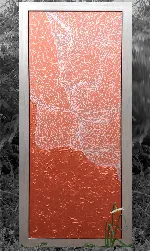
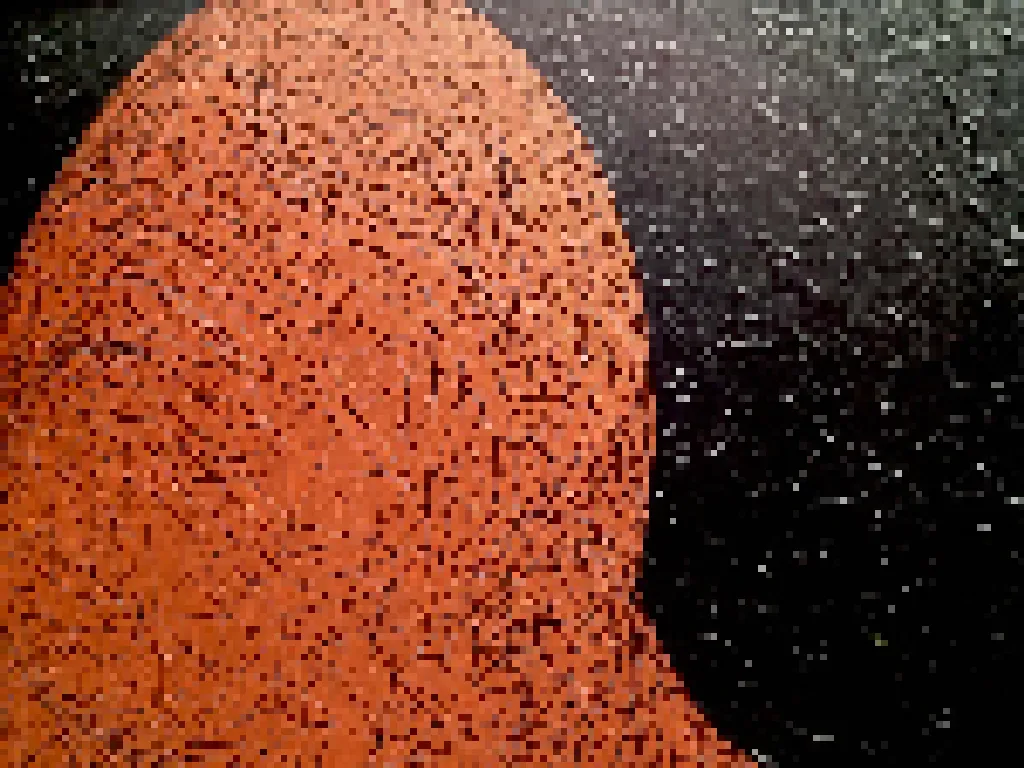
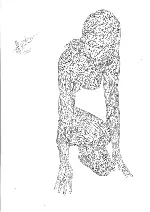
At first glance, these works appear to be constructed from nothing more than triangles. Yet hidden within the mesh are multiple realities occupying the same physical space. Each piece is built from carefully crafted geometric networks that interact with one another, causing different forms, images, or spatial interpretations to emerge depending on the viewer’s position and perspective. No single mesh tells the whole story; meaning arises from the relationship between them. As the eye moves, one reality dissolves and another appears, revealing how perception itself is an act of construction. Using only the simplest geometric element — the triangle — the works explore a profound idea: that reality is not fixed, but emerges from the interaction between observer, structure, and viewpoint. What seems to be a single object becomes two simultaneous truths, coexisting within the same geometry, waiting to be discovered. All three-dimensional forms — from classical sculpture to digital characters, architectural models, and virtual worlds — can be expressed as a mesh of triangles. In mathematics and computer graphics, these interconnected triangles form the underlying structure from which complex surfaces emerge. Curves, contours, faces, and entire landscapes can all be reduced to this simplest geometric language. But in these works, the mesh is not merely a technical structure. It is the stage on which multiple realities are brought into contact. Jonty Hurwitz uses mathematics as a foundation, but the magic of the work lies in the hand-crafted act of bringing these realities together. Each mesh is carefully shaped so that one set of triangular relationships gives rise to one image, while another configuration reveals a second. These realities do not simply sit side by side; they interlock, overlap, and negotiate with one another within the same physical object. The artwork becomes a kind of perceptual threshold, where geometry, intuition, and the movement of the viewer decide what can be seen. The artistic challenge is to make two truths coexist without cancelling each other out. Every triangle must belong to the logic of the whole, yet also participate in the emergence of something hidden. The result is a work that feels both mathematical and deeply human: a structure born from geometry, but animated by touch, judgement, and imagination. In each piece, the mesh becomes more than a surface. It becomes a field of possibility, where reality is folded, doubled, and revealed through the act of looking.