What Do You Believe?
- Materials
- Thermoset Polymer And Aluminium
- Edition size
- Edition of 9 + 3 AP
- Dimensions
- 156w x 45h x 15d (cm)
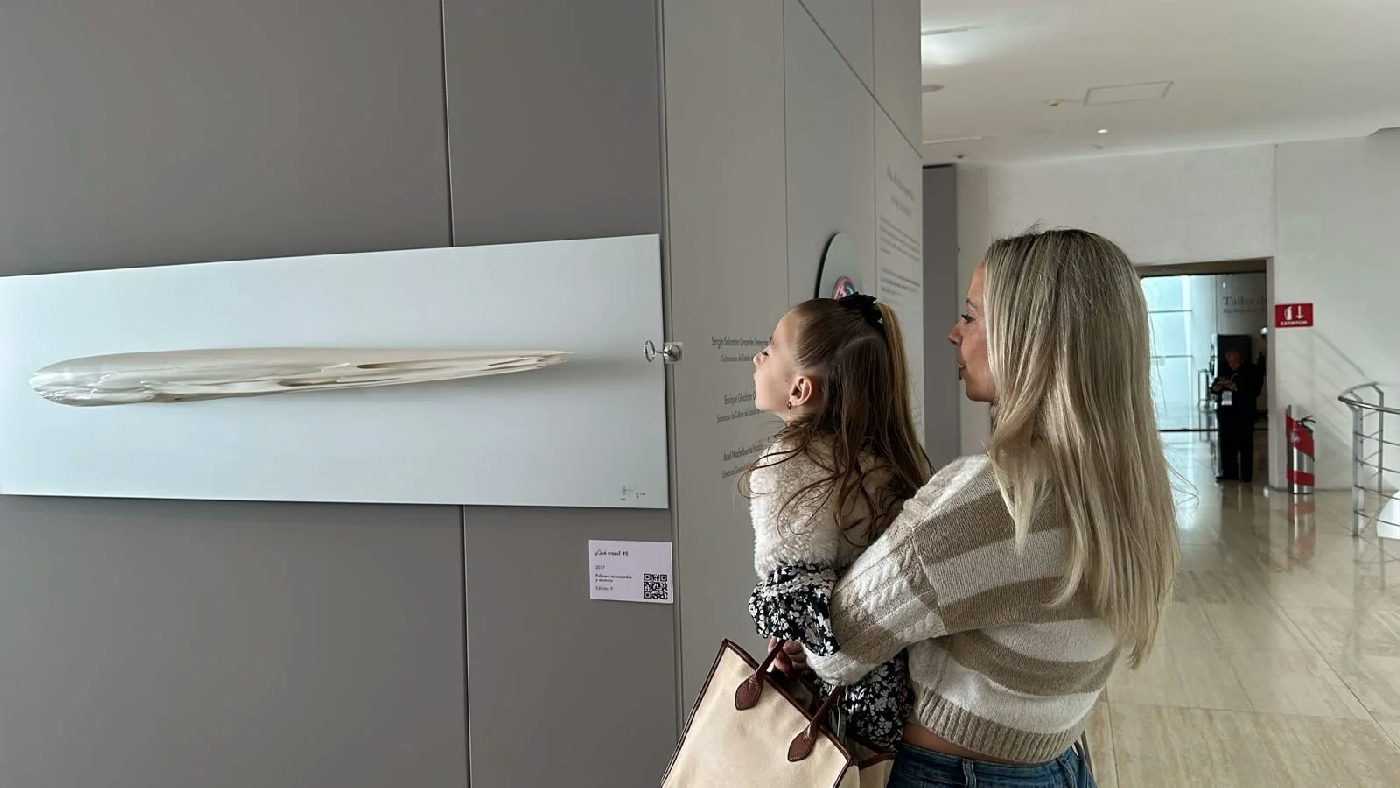
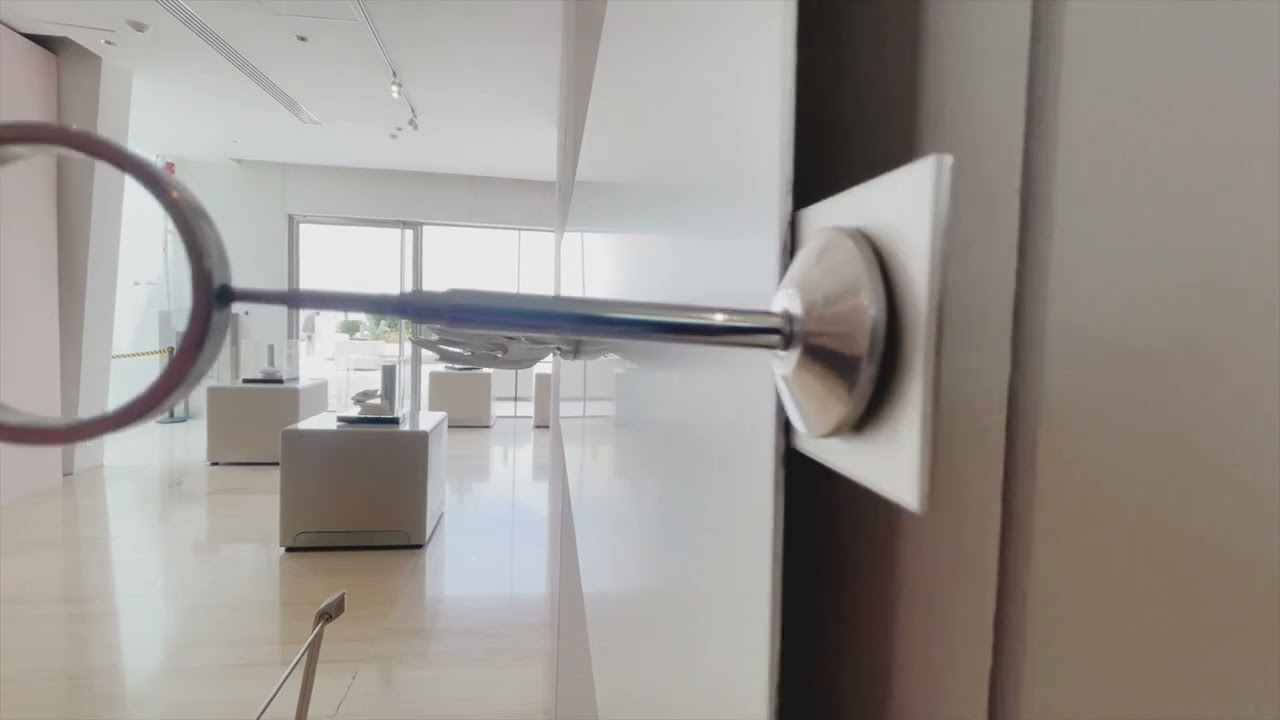
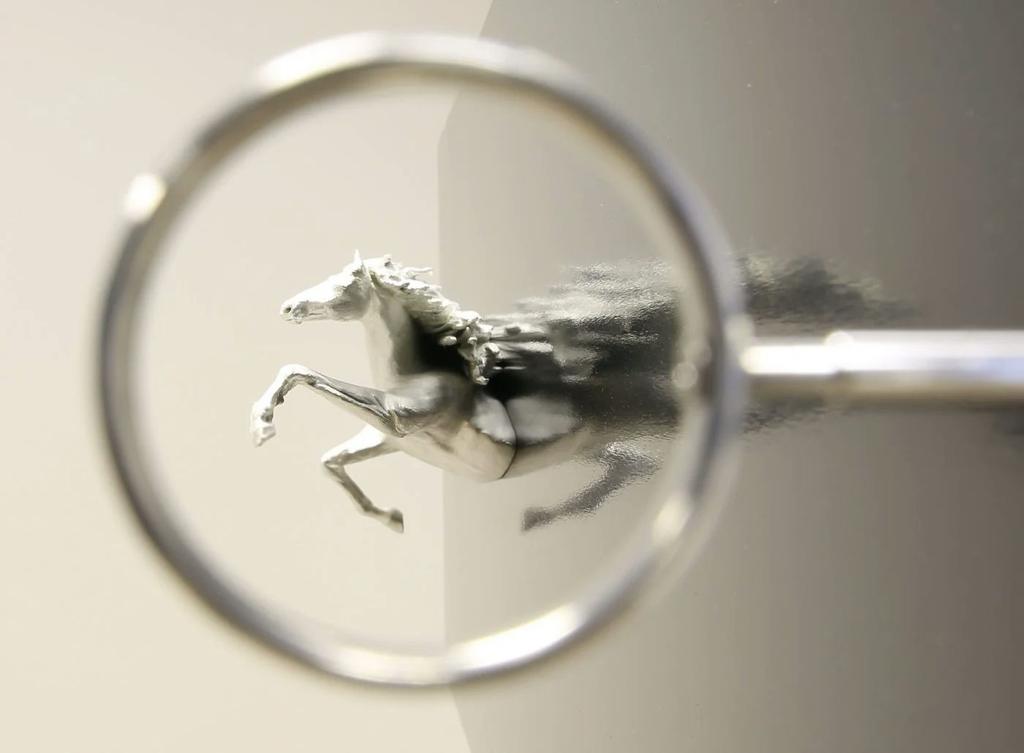
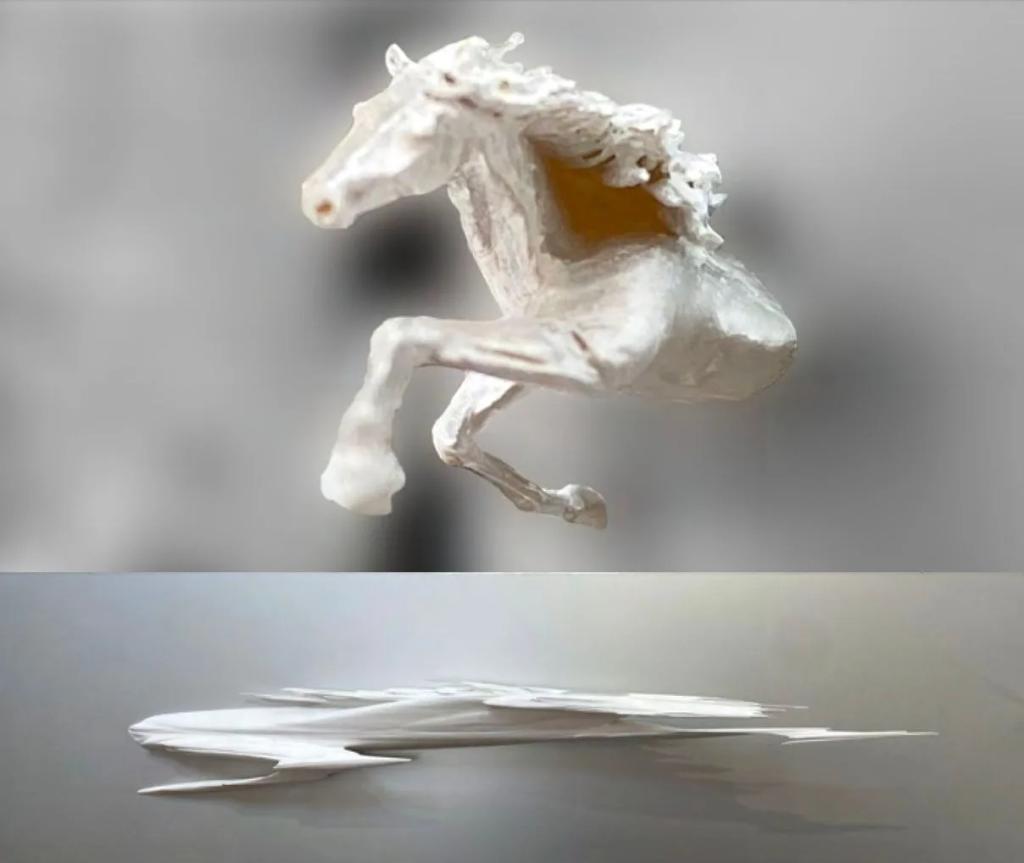
At its core, the artist's work is not merely a sculpture but a profound exploration of life, death, and what might come after. The piece draws upon the hauntingly enigmatic anamorphic skull found in Hans Holbein the Younger’s renowned 16th-century painting, "The Ambassadors", seeking to delve into our intricate relationship with mortality.Holbein's skull, warped and stretched across the bottom of the canvas, only coalesces into a recognizable form when viewed from a particular angle. Similarly, the artist's sculpture may invite viewers to perceive death not as a stark, unequivocal end but as something that can be seen and understood in myriad ways depending upon one’s perspective.The sculpture underscores an enthralling dichotomy: the palpable, tangible skull representative of death, and the elusive, unfathomable questions regarding what follows our mortal existence. It doesn’t propound a singular truth about death or afterlife but rather urges viewers to embark on a reflective journey into the abyss of their own beliefs and apprehensions.A philosophical thread woven through the piece suggests that death might not be a mere binary opposite of life, not just an abrupt cessation. Instead, if one embraces the concept of an afterlife or a spiritual realm, death could be envisioned as a transformative passage. It isn't a leap from being to non-being, but a continual shift from one state of energy to another, a metamorphosis that’s perhaps as unfathomable as an anamorphic skull that only reveals itself fully from a specific viewpoint.The artist, in fashioning this piece, creates a space where viewers might ponder about the fluidity between life and death, physicality and spirituality. It tacitly nudges the observer to contemplate: If death is not an end, but a transformation, how does that shape our understanding of life itself? What implications might it hold for how we live, love, and forge connections with others?This philosophical artwork does not endeavor to dictate answers. Rather, it gracefully unfolds a space, a moment in time, wherein observers may dwell, question, and perhaps leave with more inquiries than they arrived with—continuing the timeless human tradition of exploring the elusive mysteries shrouding our existence.
Tribute to Holbein
This artwork takes its inspiration from the masterpiece of Hans Holbein the Younger in the 17th century — The Ambassadors, held by the National Gallery in London. The work explores the idea of mortality — more specifically your own awareness of your own mortality. This synthesis of painting and sculpture takes the concept of "Aperture Synthesis" from Astronomy and metaphorically applies the technique to Holbein's work, offering an alternative perspective on the same heavenly bodies.
A Short History Lesson
Holbein was one of the most accomplished portraitists of the 16th century. He spent two periods of his life in England (1526-8 and 1532-43), portraying the nobility of the Tudor court. Holbein's famous portrait of Henry VIII (London, National Portrait Gallery) dates from the second of these periods. 'The Ambassadors', also from this period, depicts two visitors to the court of Henry VIII. 'Christina of Denmark' is a portrait of a potential wife for the king.
Holbein was born in Augsburg in southern Germany in the winter of 1497-8. He was taught by his father, Hans Holbein the Elder. He became a member of the Basel artists' guild in 1519. He travelled a great deal, and is recorded in Lucerne, northern Italy and France. In these years he produced woodcuts and fresco designs as well as panel paintings. With the spread of the Reformation in Northern Europe the demand for religious images declined and artists sought alternative work. Holbein first travelled to England in 1526 with a recommendation to Thomas More from the scholar Erasmus. In 1532 he settled in England, dying of the plague in London in 1543.
The most notable and famous of Holbein's symbols in the work is the distorted skull which is placed in the bottom center of the composition. The skull, rendered in anamorphic perspective, another invention of the Early Renaissance, is meant to be a visual puzzle as the viewer must approach the painting nearly from high on the right side, or low on the left side, to see the form as an accurate rendering of a human skull. While the skull is evidently intended as a vanitas or memento mori, it is unclear why Holbein gave it such prominence in this painting. One possibility is that this painting represents three levels: the heavens (as portrayed by the astrolabe and other objects on the upper shelf), the living world (as evidenced by books and a musical instrument on the lower shelf), and death (signified by the skull). It has also been hypothesised that the painting is meant to hang in a stairwell, so that persons walking up the stairs and passing the painting on their left would be startled by the appearance of the skull. Artists often incorporated skulls as a reminder of mortality, or at the very least, death.
Source: Wikipedia