The Children are Blackberrying Today
- Materials
- Polargraph Drawing On Original Daily Herald Newspaper Clip (September 4, 1939)
- Edition size
- Unique
- Dimensions
- 80 x 106 cm
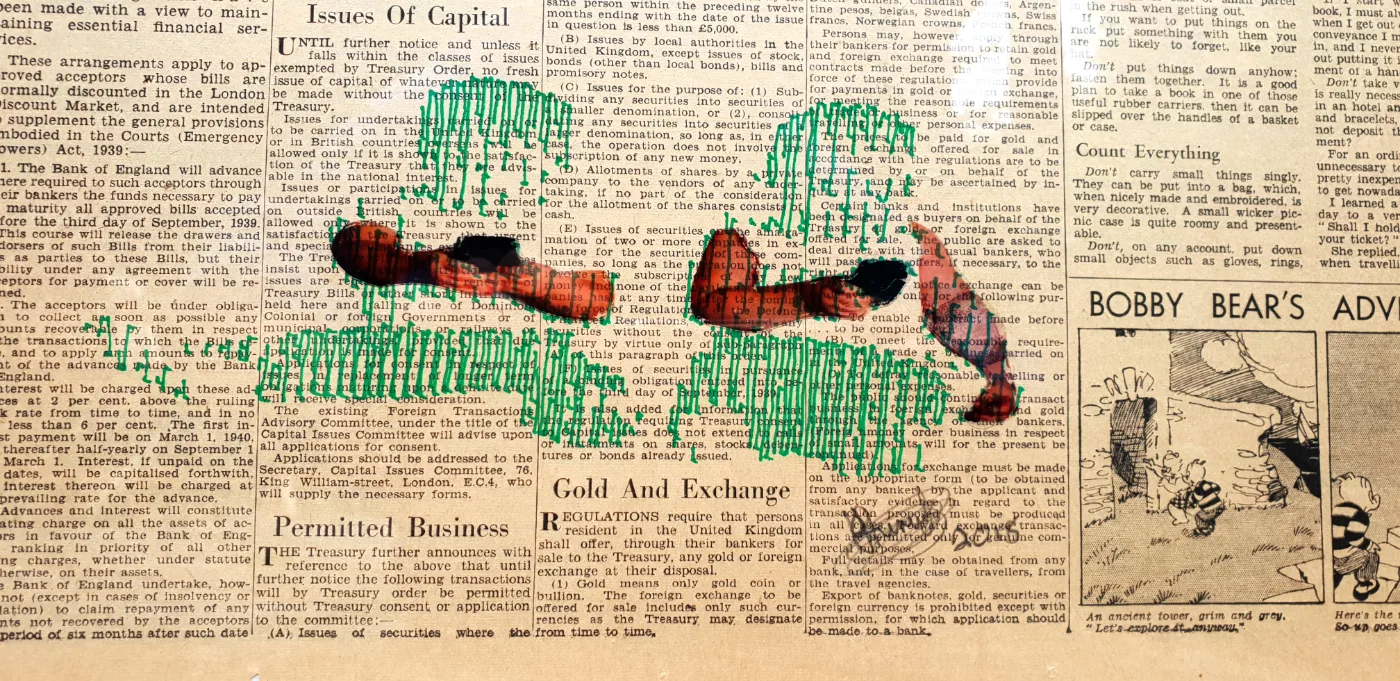
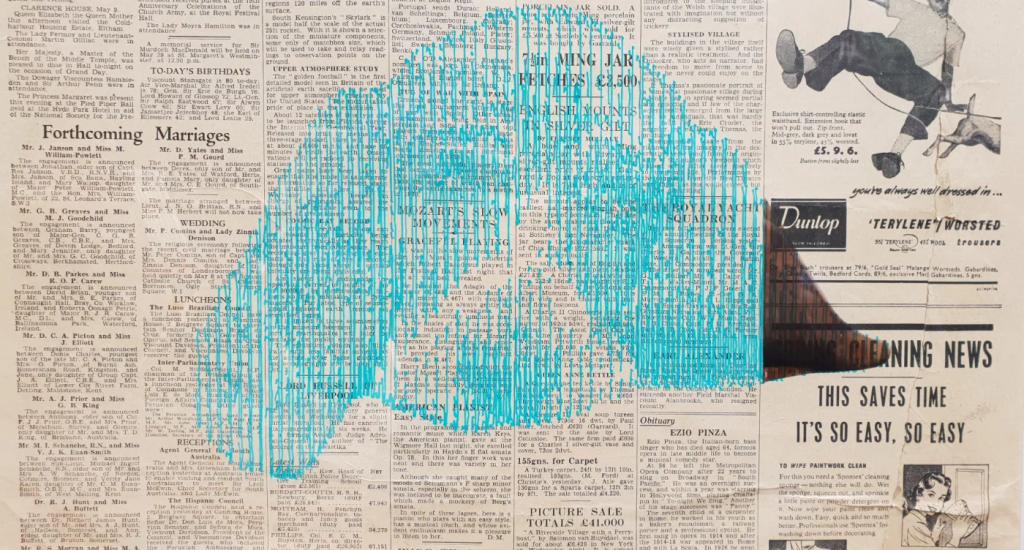
There is a quiet, rhythmic magic in the way “The Children Are Blackberrying Today” came into existence. At first glance, it appears to be a delicate pen-and-ink drawing. But look closer, and you’ll see the fingerprint of a machine translating mathematics into motion. This work was created using a polargraph—a drawing device that moves beyond the standard printer to bridge the gap between digital precision and the tactile beauty of ink on paper. A polargraph doesn’t print; it draws. Suspended between two motors by a pair of cords, a pen glides across the surface like a pendulum. Driven by the geometry of polar coordinates, the machine interprets an image as a sequence of thousands of tiny, calculated adjustments. As one motor pulls and the other releases, the pen traces a continuous path, building the image slowly over the course of hours. What makes this edition so compelling is that, while it originates in code, it lives in the physical world. Because it uses a real pen on real paper, the drawing captures the subtle, human-like irregularities that a digital print never could. You might notice a slight tremor in a line, a variation in how the ink settles into the grain of the paper, or the faint influence of gravity on the mechanical arm. These tiny imperfections mean that no two drawings are ever identical. In Jonty Hurwitz’s work, the polargraph acts as a bridge. It takes the cold world of algorithms and datasets and breathes life into them through friction and ink. “The Children Are Blackberrying Today” is more than just a portrait; it is a physical record of time and motion, showing us that even the most complex digital ideas can find a soul when written by hand.