Mirror Anamorphosis
Also: Cylindrical anamorphosis, Catoptric anamorphosis, Anamorphic reflection, Mirror distortion, Anamorphoscope
Mirror (catoptric) anamorphosis is a technique in which a distorted image on a flat surface resolves into its true form only when reflected in a curved, usually cylindrical, mirror.
Definition
A form of anamorphosis in which a distorted image is reconstructed into its intended appearance by reflection in a curved, usually cylindrical or conical, mirror.
Discussion
Frequently Asked Questions
What is cylindrical mirror anamorphosis?
Cylindrical mirror anamorphosis — also called catoptric anamorphosis — is a technique in which a heavily distorted image on a flat surface reconstructs into its true form only when a polished cylindrical mirror is placed at its centre. The viewer looks at the mirror rather than the image, and sees the resolved picture on the curved surface.
How does a cylindrical mirror correct the distortion?
The flat artwork is the exact mathematical inverse of what the cylinder does to light. The image is wrapped and stretched outward using a polar mapping; the mirror unwraps it, compressing the smeared paint back into a legible figure.
Why do artists use a mirror instead of a fixed viewpoint?
A mirror makes the illusion portable and repeatable: any viewer standing in front of the work sees it resolve, rather than having to hunt for a single spot in the room. In Jonty Hurwitz's sculptures the cylindrical mirror is an integral component of the artwork, not a viewing aid — the piece only exists in the moment of reflection.
Featured in
-
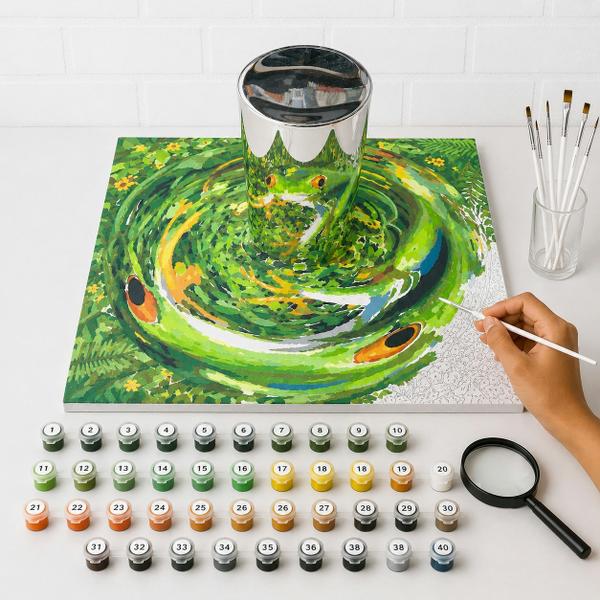 The Jungle Secret2026
 -
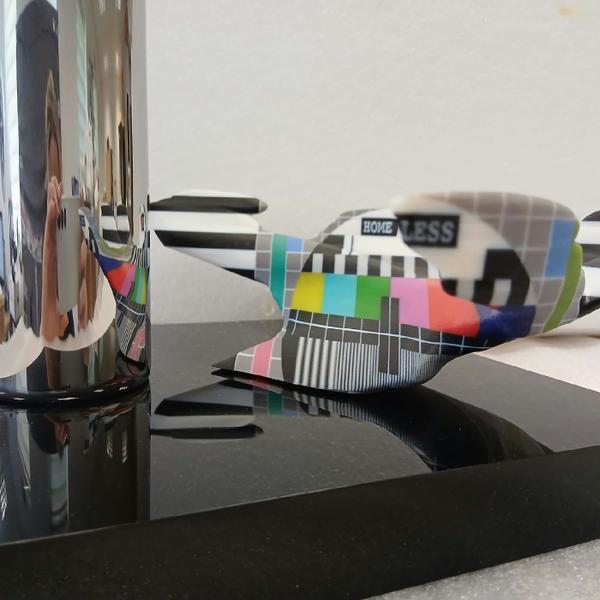 Home2026
 -
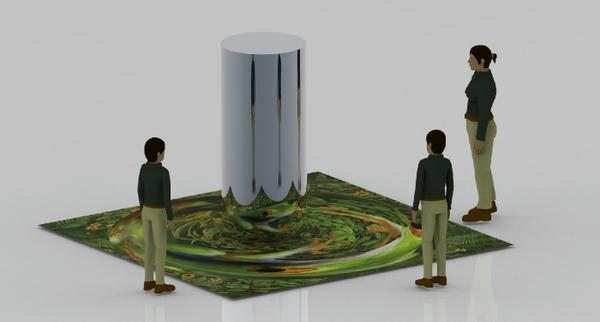 The Jungle Secret2026
 -
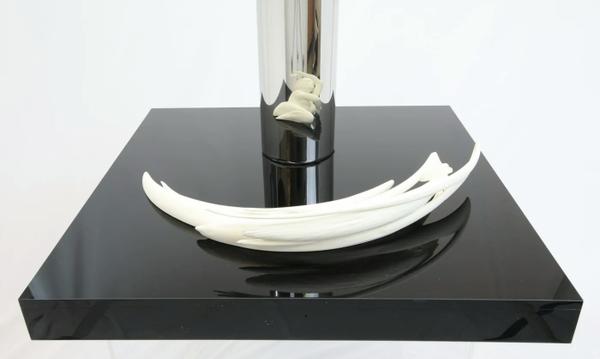 Reality Bath in Ivory2025
 -
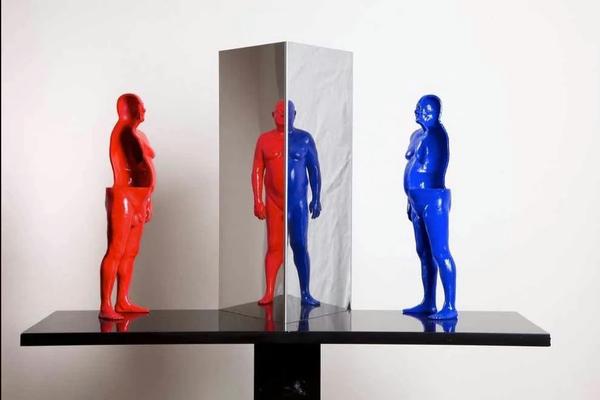 Dad I Can't See You Properly (La La Land)2025
 -
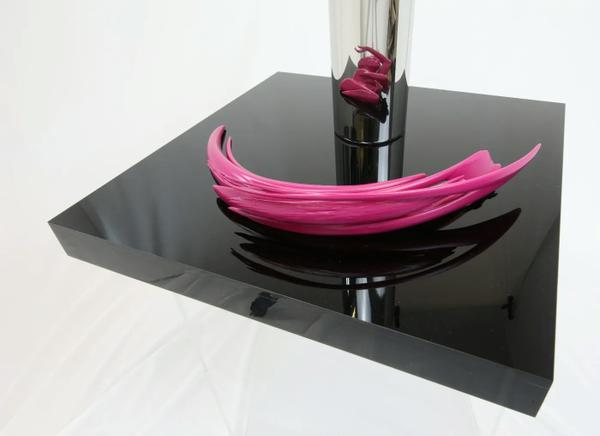 Reality Bath in Fuchsia2025
 -
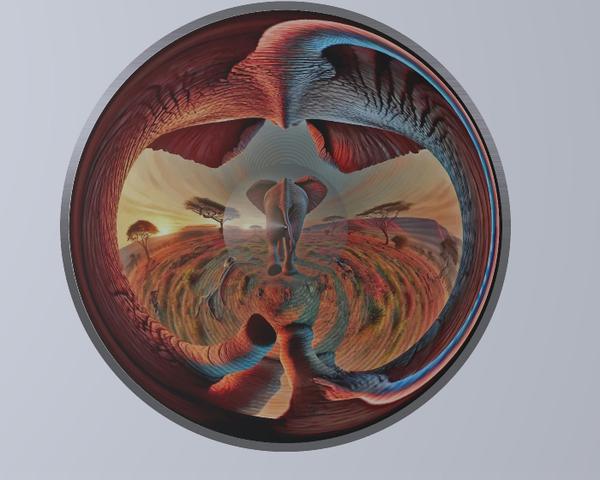 From the Other Side2024
 -
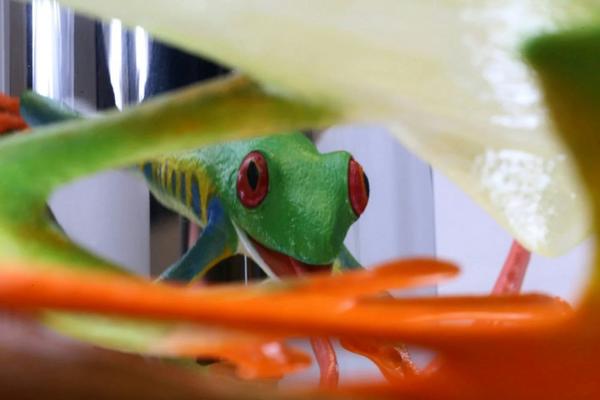 Alchemy - Leaping Frog2024
 -
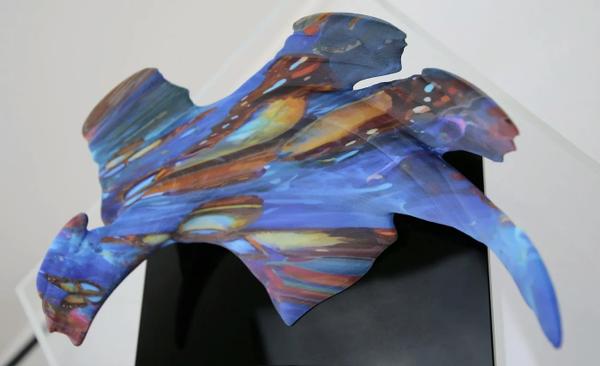 Metamorphosis of Mariposa - Butterflies Hand2024
 -
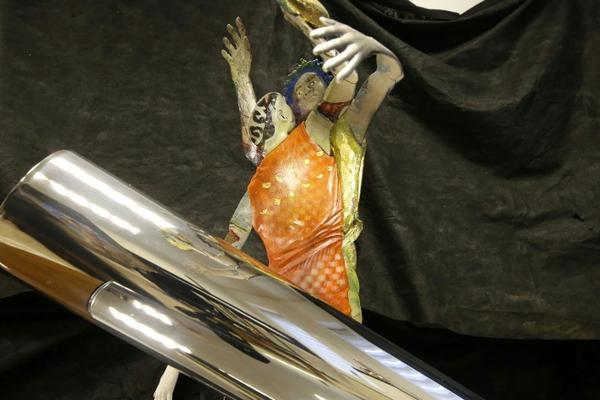 Take the Shot by Hand2024
 -
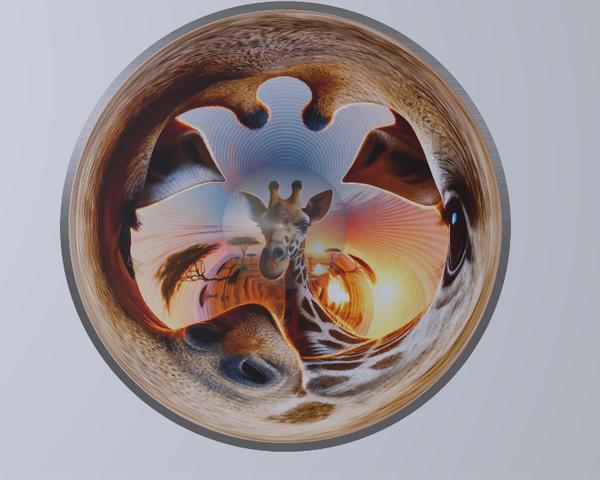 A Higher Perspective2024
 -
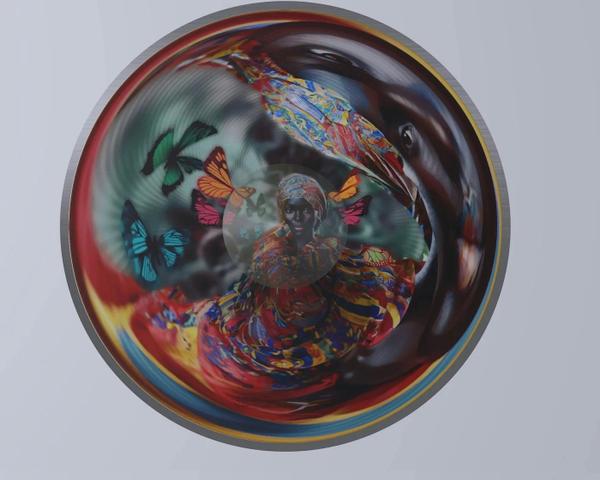 Matriarch2024
Related concepts
Anamorphic sculpture is a three-dimensional work that looks abstract from most angles and resolves into a recognisable image only from one exact viewpoint or in a mirror.
Anamorphosis is a technique in which an image is deliberately distorted so it resolves into its true form only from one specific viewpoint or when reflected in a curved mirror.
Anamorphic art works by distorting an image with a precise geometric mapping, so it only resolves into its true form from one exact viewpoint or when reflected in a curved mirror.
Limited-edition prints, sculptures and reproductions of Jonty Hurwitz's anamorphic and optical-illusion works, available to purchase directly and by commission.